The problem today might not be a lack of data. “Banks
, NBFCs and other financial institutions have more financial information in their disposal than ever before. Bank transactions, digital financial records, Account Aggregator data and other sources can provide a much more detailed picture of a borrower’s financial behavior. The challenge is to turn this information into meaningful credit intelligence without adding more manual effort to an already complex underwriting process.
“This is where the next generation of AI credit underwriting is happening.” As lenders look beyond a limited set of static indicators of creditworthiness, they can look at the financial behaviors that underlie a limited number of static indicators.
Why Credit Scores Are Only Part of the Puzzle
Credit scores are an important measure of past credit behavior, but do not necessarily tell the whole story about a borrower’s current financial position. Now, let's look at two borrowers with similar bureau scores. One can have a steady income, predictable expenses and healthy monthly cash flows and the other can have an inconsistent income, high financial obligations and increasingly unpredictable account balances.
To a lender, these two borrowers might appear to carry very different levels of risk even if they have similar scores.
This is the reason that modern underwriting is moving toward wider assessment of repayment capacity. Lenders want to see not just whether a borrower has paid back credit responsibly in the past, but how the borrower is managing money today.
In this case, bank statements are especially helpful because they include behavioral information that may not be clear from a credit score alone. But that’s where the problem starts: transaction data is by nature unstructured. Lenders can receive thousands of transactions across multiple accounts and in multiple formats. Interpreting these transactions manually can be time consuming.

Role of Bank Statement Analysis in Borrower Assessment
An analysis of bank statements is an important part of this transformation. The traditional analysis is generally to look at the transactions, identify the income and expenses, calculate the cash flows and prepare the observations for the credit team. Modern bank statement analysis software structures and standardizes much of the underlying data processing.
But the more important development is what lenders can do with the information that emerges.
A more sophisticated view than simply stating that a borrower receives a certain amount of money per month can take into account whether these credits are permanent, whether the income is stable, how expenses change over time and whether the account has sufficient cash-flow resilience after regular obligations.
This differentiation is especially relevant in India, where lending institutions cater to a diverse set of borrowers, ranging from salaried individuals to self-employed professionals, small business owners and borrowers with less conventional income patterns.
Hence, bank statement analysis may become more than a
document-processing function for an NBFC. It is a significant aspect of
understanding the actual financial behavior of the borrower.
Understanding Cash Flow Instead of Looking Only at Income
Income is one of the most important variables in the credit assessment. Income amount does not necessarily indicate repayment capacity.
A borrower could have large inflows and large recurring obligations every month. Another borrower has lower income but very stable income, and much more predictable expenses. Lenders can tell the difference between these situations by looking at cash flow behavior.
Here, AI-powered analysis can supplement conventional underwriting. History of transactions may be examined over a period of time to identify recurring income, financial obligations, odd movements and changes in account behavior. It is not intended to replace existing credit metrics, but to supplement them with a more contextual view of the borrower.
This can be especially useful to lenders when evaluating borrowers who do not clearly fit into conventional underwriting models.
Account Aggregator Data Is Changing the Data Layer
The Account Aggregator ecosystem in India is also enabling the evolution of digital underwriting. This type of consent-based access to financial information could result in less reliance on paper-based documents, and enable lenders to access structured financial information from participating providers.
But access to data is only the beginning.
The real value is the ability to interpret this data consistently and map it to the existing underwriting framework of the lender. Risk indicators such as account aggregator information can be evaluated in combination with transaction behavior, income patterns, existing obligations and other indicators.
It enables the move from document-led underwriting to data-led underwriting, where financial information can be continuously analyzed within the framework of a credit decision.

Fraud Detection and Underwriting Are Becoming More Connected
Another important change is the link between fraud detection and credit scoring. The current process involves two separate steps: fraud checks and underwriting. However, unreliability of financial information can directly impact the reliability of credit assessment.
Examples include irregular transaction patterns, erratic income behavior or suspicious movement of funds that may require further investigation before the information is relied on to determine repayment capacity.
This makes the software for detecting bank statement fraud all the more relevant to the underwriting process. Rather than treat fraud detection as a standalone control, lenders can incorporate fraud signals into the overall evaluation of financial information.
The goal should not be to automatically dismiss all oddball transactions. “Financial behavior is complicated and legitimate borrowers may have unusual transactions. A better approach is to identify the trends that are worth investigating further, and empower the credit professional to investigate those trends.
CAM Automation Can Bring the Analysis Together
The last step in underwriting is often not just obtaining the information, but turning it into a decision-ready assessment.
Before writing a Credit Appraisal Memo, credit teams can review bank statements, financial documents, bureau information and other supporting data. If this information is collected manually, a lot of time can be spent on the preparation of the assessment instead of its evaluation.
And this is where CAM automation software can play a role in the broader underwriting process. Lenders can use CAM automation to create a structured assessment of financial insights, risk observations, exceptions and supporting information, rather than just using it to automatically generate documents.
The difference is a difference. Automation shouldn't be aimed at making the credit memo longer or faster. It should be to facilitate an underwriter looking at the underlying credit assessment.

The Future of Underwriting Is Not Fully Automated
The future of lending is frequently described as one of fully automated decision making. In practice, the more sustainable model might be more nuanced.
Credit underwriting involves judgment, interpretation of policy and handling exceptions. A simple application may be well served by a highly automated workflow while an application with irregular income patterns, policy exceptions or potential fraud indicators may require the experienced hand of a human.
It’s more about the time the credit officer spends, and less about removing the credit officer from the process.
The underwriter is no longer burdened with gathering information from documents and calculating basic financial indicators. Rather, he can focus on exceptions, risk interpretation and final judgment. This leads to a human-in-the-loop model where the repetitive analytical work is done by technology but the credit professionals handle complex decisions.
From a risk management and governance perspective, this is important to financial institutions.
Building a More Contextual Credit Decision
So the next generation of underwriting is about more than simply replacing manual processes with AI. This is about the more connected view of the borrower.
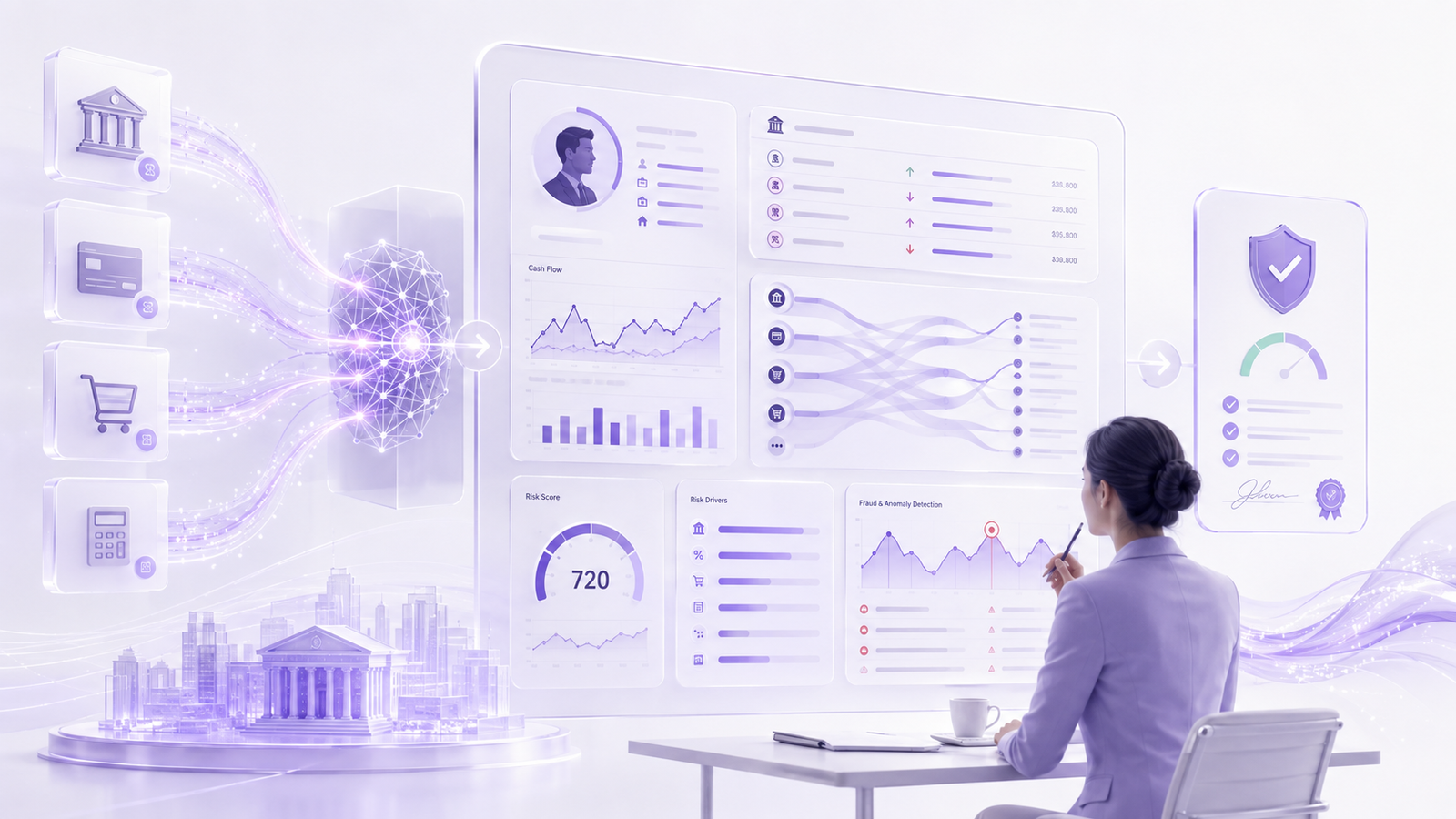
Behavioral insights come from analyzing bank statements. Account Aggregator data can help increase access to financial information. Fraud detection can verify that information for credibility. Income and cash-flow analysis can provide context around repayment capacity, and CAM automation can help bring the resulting insights into a structured credit assessment.
Together, these capabilities can form the basis for an automated loan underwriting system that allows for faster, more consistent decisions, but with proper oversight by humans.
Novel Patterns’ CART uses AI-driven analysis of financial data, credit underwriting, fraud intelligence and CAM automation to combine these capabilities. The goal is to help financial institutions move from a fragmented approach to financial information to a more systematic and contextual credit assessment process.
The future of credit underwriting for banks, NBFCs and other financial institutions will not just be about how fast a lending decision can be taken. How that plays out will depend on how well lenders can combine data, financial behavior, risk intelligence and human judgment to make better informed decisions at scale.