
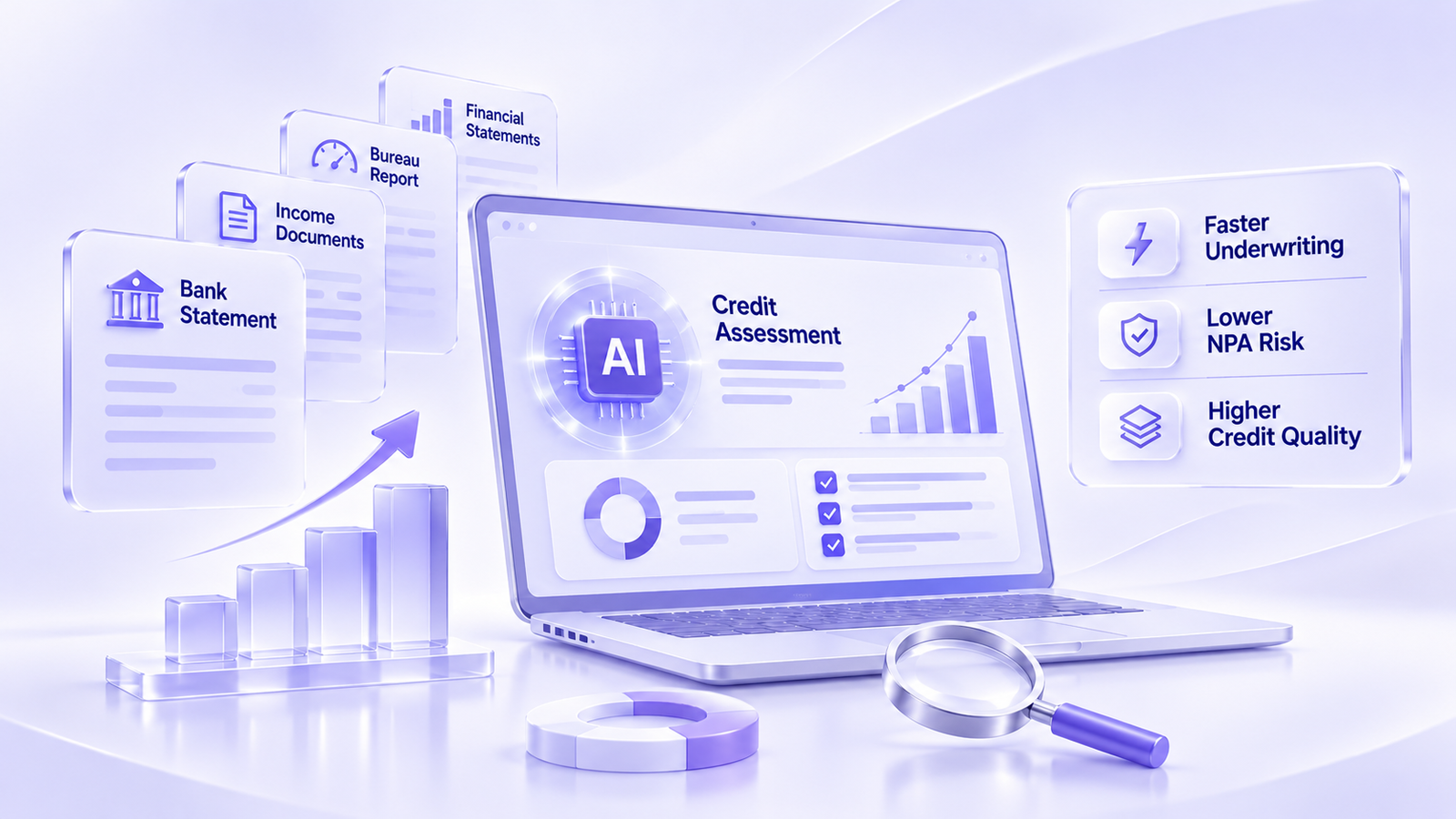
This is a continuing problem for lending institutions - how to grow the size of their loan portfolios and at the same time maintain the quality of credit decisions. Fast loan processing can help with customer acquisition and efficiency, but not at the expense of sound risk assessment. But lengthy manual reviews can also slow approvals, drive up operating costs and create friction for borrowers.
For banks, NBFCs and fintech lenders, the answer is increasingly in improving the way financial information is collected, analyzed and translated into credit decisions.
AI-powered credit assessmentandbank statement analysiscan make this process faster, more consistent and more informed for lenders.
Why you need to transform the traditional credit assessment?
Traditionally, credit assessment is based on several sources of information such as credit bureau reports, income documents, financial statements, bank statements and declarations of the borrower.
These sources are still useful, but reviewing them manually can be tedious. Credit teams might have to look through a range of documents, reconcile transactions, pinpoint income patterns and dig into odd activities before deciding.
The challenge grows with volumes. Manual processes can make it hard to ensure consistency across applications, especially where information is presented in different formats or needs to be extensively verified.
There is also the danger of missing important signals. The borrower may have a good credit score; however, he may also have irregular cash flows, cheque bounces and declining account balances. These indicators may provide some additional context around repayment capacity.
That’s why lenders need to look beyond individual documents and consider the broader financial behavior of borrowers.

Analysis of bank statements and their role in assessing credit
Bank statements show a borrower’s financial activity, transaction by transaction. They help lenders to understand the money movement in an account, which gives them a perspective that may not be available with a credit score or income declaration alone.
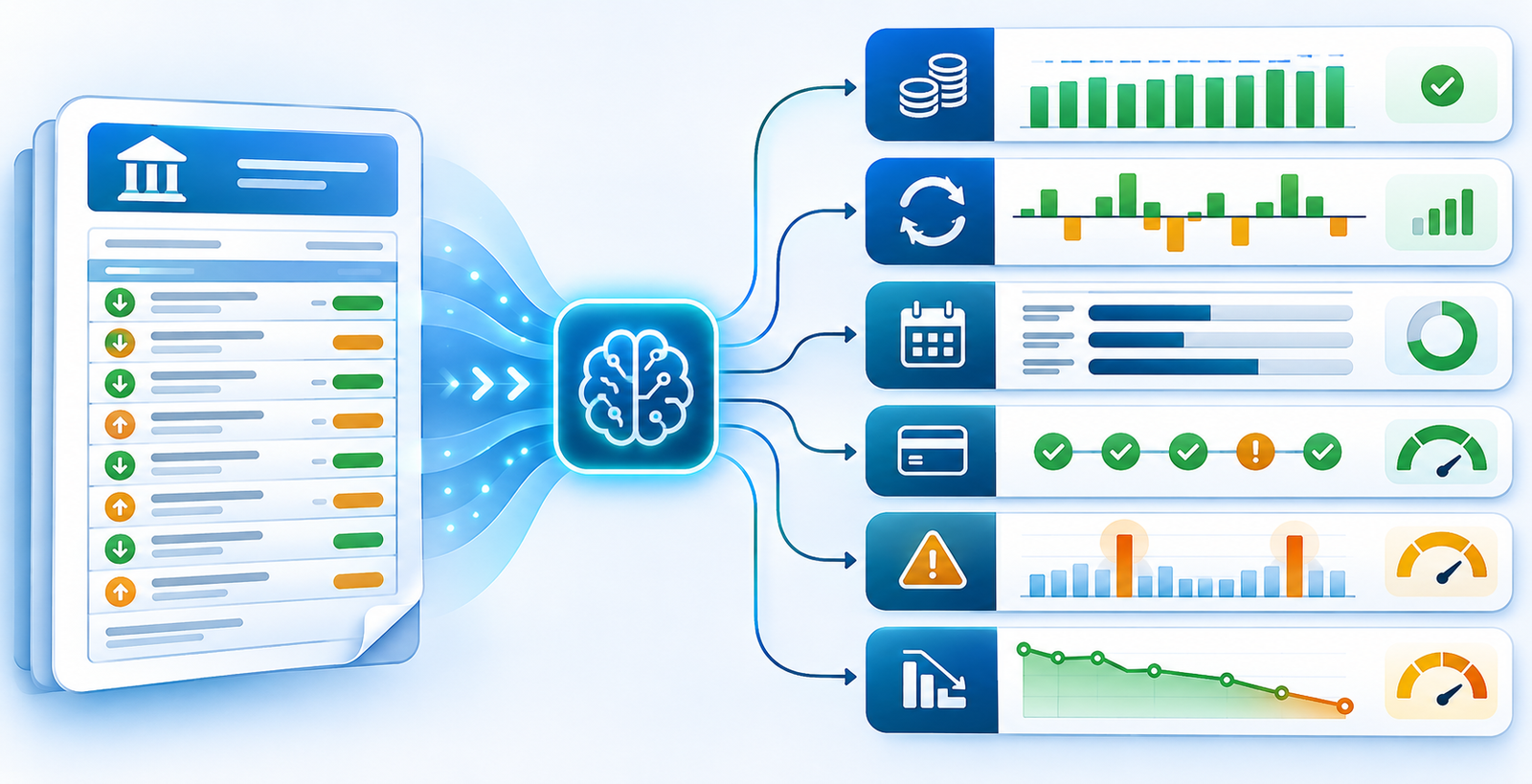
If you take a close look on bank statements, you can tell:
·Income Consistency:Consistent salary credits, business receipts and income fluctuations.
·Cash flow patterns: Monthly inflows, outflows and cash balances
·Current obligations:EMIs, loans and other regular financial obligations.
·Payment behavior:Cheque bounces, late payments and insufficient balance cases.
·Strange transactions:large unexplained credits, regular cash deposits, transactions that don’t fit with the normal pattern of account activity.
·Financial stress indicators:falling balances, increased overdraft usage and changes in spending patterns.
By looking at these indicators, bureau information and other borrower data can provide lenders with a more complete picture of creditworthiness.
Bank statement analysis is not a replacement for other credit assessment methods, but a supplement. Patterns of transactions need context, and an outlier transaction is not necessarily a signal of credit risk.
How AI improves reading bank statements?
AI and automation can help to improve the efficiency of bank statement analysis by reducing the amount of manual work required to extract, classify and interpret transaction data.
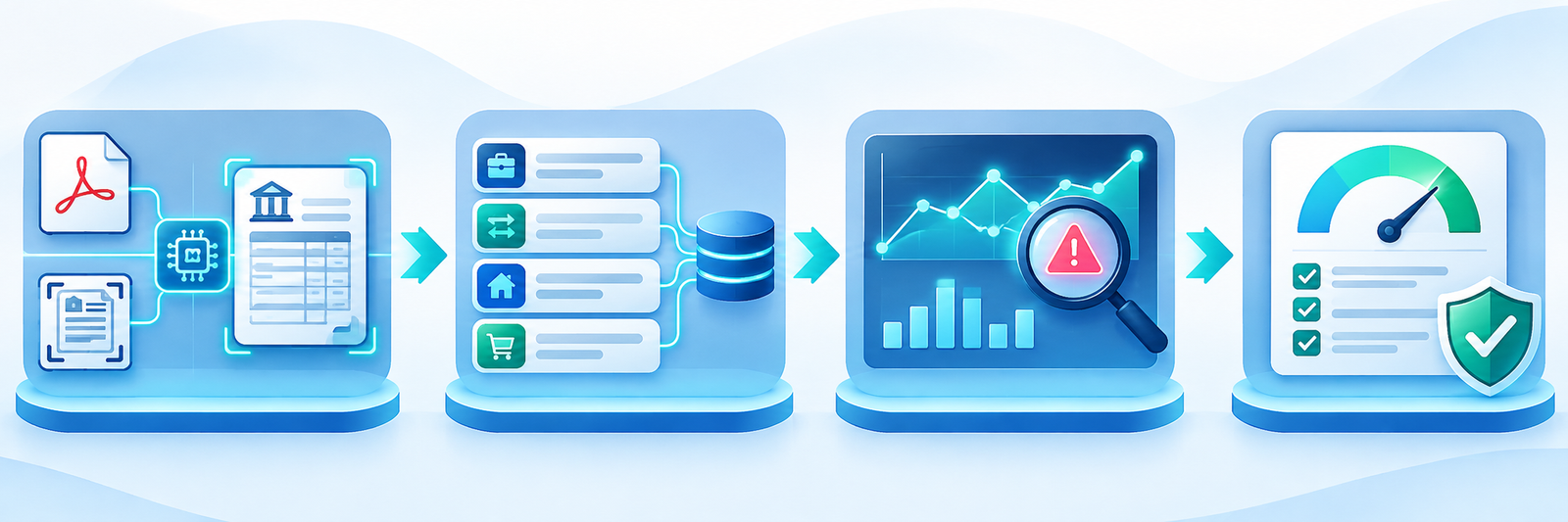
A technology-enabled process usually has four stages.
Automatic document extractionThe system extracts the relevant information from bank statements in different formats such as pdf documents and scanned files. OCR and intelligent document processing can help turn unstructured information into usable data.
Classification of transactionsTransactions are categorized into relevant groups such as salary, business receipts, loan repayments, transfers, utilities and other expenses. Correct classification assists the credit teams to understand the financial behavior of the borrower.
Pattern and anomaly detection
Analytics models can identify repeating patterns, transactions that fall outside of the norm, changes in cash flow and other indicators that may warrant a closer look.
Credit rating support
The extracted information can be presented in the form of
structured reports and indicators that assist underwriters to evaluate the
repayment capacity and make better choices.
This reduces repetitive manual work and enables credit teams to focus on interpretation, exceptions and judgment.
How can this help in reducing NPAs and improving turnaround time of lending?
There is an important link between better credit assessment and asset quality. With more reliable and comprehensive financial information available before disbursement, lenders are able to identify potential risks earlier in the underwriting process.
AI-enabled analysis can assist with this in several ways:
1. Enhanced risk identification:During the assessment, cash-flow inconsistencies and potential signs of financial stress can be identified.
2. More consistent evaluations:Standardized extraction and classification make the process less dependent on manual data handling.
3. Faster underwriting:Automated document processing can speed up the time it takes to review financial information.
4. Improved policy adherence:Structured data can assist lenders in evaluating applications against the prescribed credit policies.
5. More efficient exception handling:Applications that require a closer look can be routed to the appropriate human reviewer.
These capabilities can enhance credit assessment but cannot guaranty lower non-performing assets (NPAs). The quality of assets is also a function of borrower selection, underwriting policies, economic conditions, collections and post-disbursal monitoring.
Importance of ongoing surveillance after loan disbursal
Credit risk doesn’t stop when a loan is approved. The borrower’s financial position may change during the repayment period due to business fluctuations, income disruption or other financial commitments.
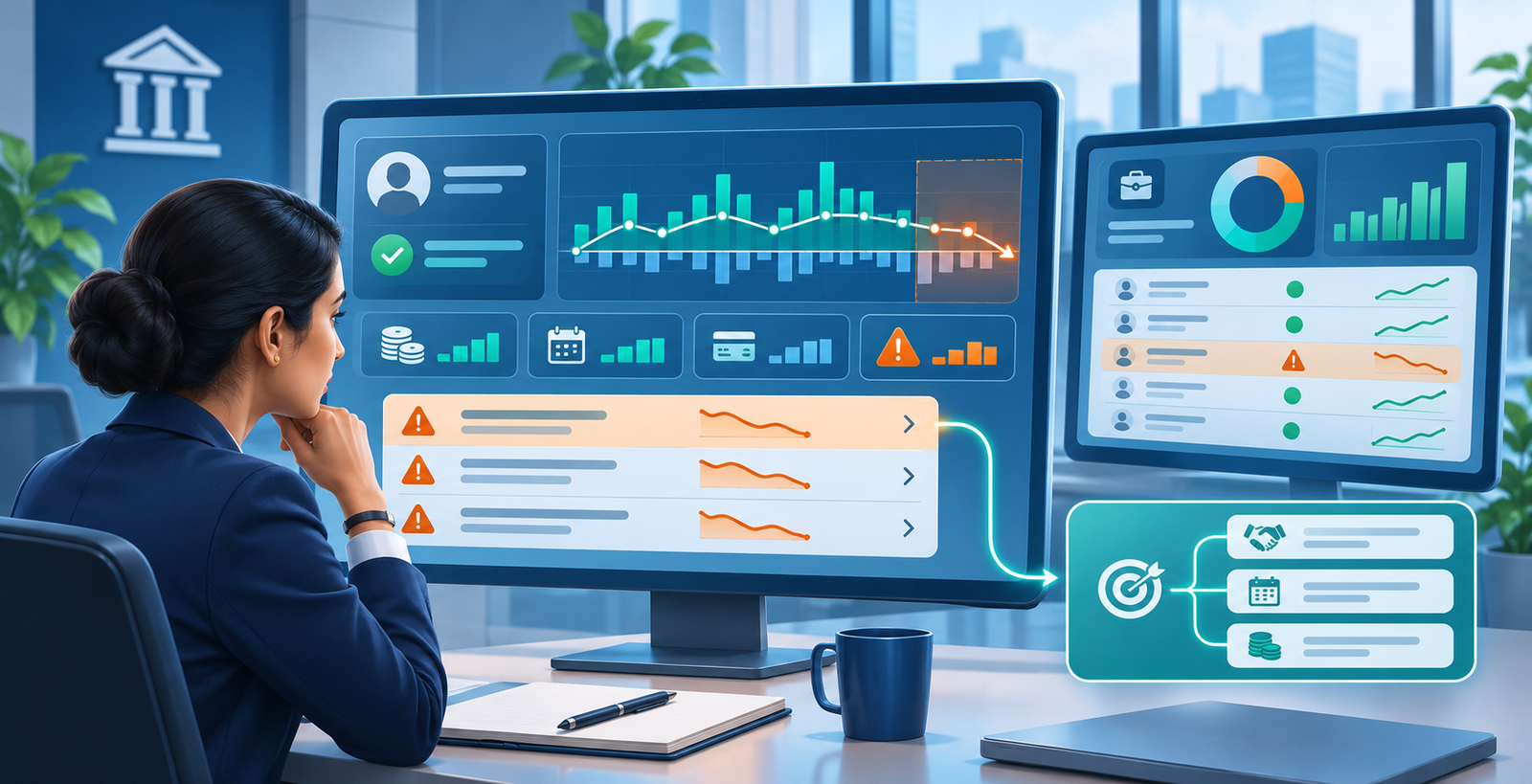
Post disbursal monitoring helps lenders to identify early warning signs and prioritize accounts for attention.
This is supported by platforms like Novel Patterns’ Hawkeye, which analyzes behavioral and cash-flow signals to help identify potential borrower stress. Earlier visibility allows lenders to investigate concerns and consider appropriate interventions.
Credit assessment, decisioning and monitoring combined
The next step in the lending transformation is linking the different stages of the credit lifecycle.
Novel Patterns does this with complementary capabilities:
CART:Automates analysis of bank statements and financial documents to assist lenders in extracting, classifying and evaluating transaction-level information.
DecisionOS:Powers lending orchestration and policy logic, making decision processes structured and explainable.
Hawkeye:Enables post-disbursal monitoring through behavioral and cash-flow signals that can help identify emerging stress.
Together, these capabilities illustrate how technology can enable a more connected approach to lending, covering everything from financial assessment and underwriting to ongoing portfolio monitoring.
The path forward
Lenders have to balance growth, speed and quality of portfolio. And doing this requires more than automating single tasks. It requires better use of financial data, uniformity in credit assessment, controlled decision making and ongoing monitoring.
AI-powered analysis of bank statements can help to make financial information more actionable, reduce manual processing and provide additional insight into borrower behavior for credit teams.
Ultimately, better informed choice-making throughout the
credit lifecycle leads to stronger lending outcomes. Those institutions that
combine reliable data, sound credit policies, human judgment and ongoing
monitoring will be better placed to scale lending responsibly.