

For years, banks and NBFCs have been investing in automating lending. Digital capture of applications, automatic extraction of documents, API driven bureau checks and application of credit rules without any manual intervention.
But you still have fragmentation across a lot of the lending processes.
A borrower could be moving through multiple systems for data collection, credit underwriting, policy validation, credit review, approval and post disbursement monitoring. Automation speeds up individual steps, but in any case, the whole decision journey can hinge on manual handoffs and disconnected intelligence.
The next evolution is autonomous lending: lending platforms that can tie together data, evidence, AI reasoning, policy, workflow and human supervision into a coordinated decisioning process.
What Is an Autonomous Lending Platform?
An Autonomous Lending Platform is a technology architecture that automates lending activities across the credit lifecycle with AI, decision intelligence, policy logic, data integrations, and workflow orchestration.
Unlike traditional automation, which usually follows pre-determined rules, autonomous lending can understand context and decide what to do next within a given set of boundaries.
For example, instead of just pulling data from a bank statement, an AI-driven lending workflow can recognize income patterns, correlate it with other financial evidence, spot divergences, enforce relevant credit policies, and direct an exception for human assessment.
The point is not to take people out of lending. It's to free people up to focus on the decisions that do need judgment.
From Loan Automation to Autonomous Credit Decisioning
The difference becomes more apparent if you consider lending technology as an evolution:Lending model | Primary capability |
Loan automation | Automates repetitive tasks |
AI-assisted lending | Generates insights and recommendations |
Agentic AI in lending | Coordinates multiple actions based on context |
Autonomous lending | Connects evidence, reasoning, policy, workflow and action |
Traditional automation says:
“What next?”
Autonomous decisioning is heading toward:
Given the evidence and policy, what should happen next, and why?
Why There is a Ceiling to Traditional Lending Automation This evolution is especially pertinent, as lenders are handling more products, borrower segments, alternative data sources, and increasingly complicated credit policies.
Automation is excellent when the process is predictable.
But seldom is the decision to lend limited to predictable tasks.
The credit officer may need to reconcile bank statements against GST information, understand an unusual cash-flow pattern, investigate a bureau discrepancy, assess an exception against policy and determine whether additional evidence is required.
These situations need context.
Disconnected automation can efficiently get each individual task done, but the credit team still has to connect the dots.

An autonomous lending platform is trying to tie those individual intelligence points into a continuous decision workflow.
How Does An Autonomous Lending Platform Works?
Architecturally, it can be understood at a high level as:
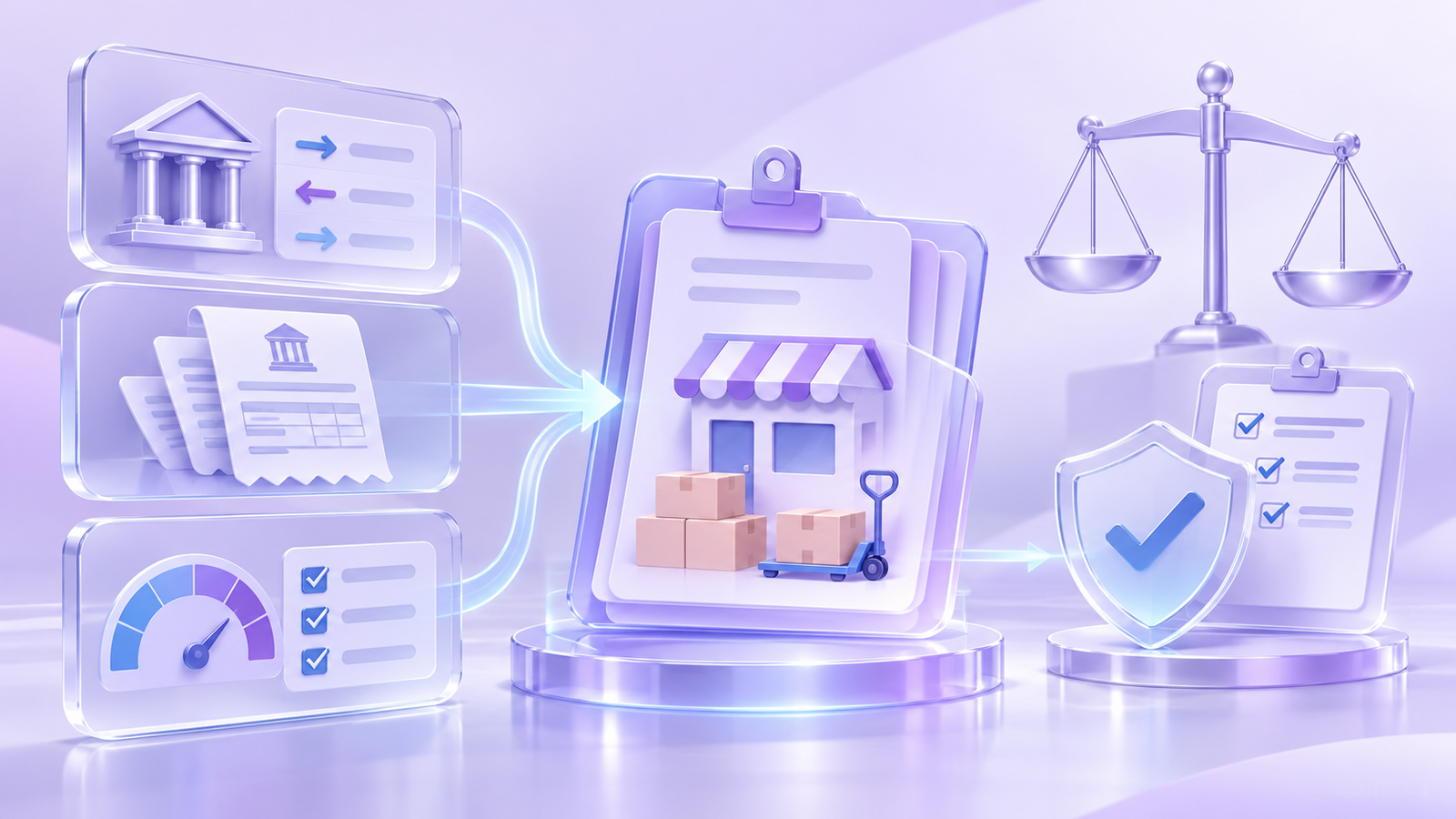
Data → Evidence → AI Reasoning → Policy → Decision → Action → People Oversight → Outcome
Let's consider an MSME borrower who is looking for working capital.
The platform is able to:
1. Collect borrower and application data.
2. Draw financial evidence from connected data sources.
3. Review bank statements, GST information, bureau data and other documents.
4. Spot inconsistencies, obligations and risk indicators.
5. Apply the applicable credit policy.
6. Make a recommendation calibrated to the risk with reasoning.
7. Route exceptions to appropriate credit officer.
8. Record the evidence, policy, reasoning and final decision for future reference.
The main difference is that those activities are not considered stand-alone automation tasks. They are part of an integrated decisioning system.
Where Does Agentic AI Fit In Lending?
Agentic AI is a further extension of this model.
Agents can coordinate defined actions based on the current context rather than waiting for a human to initiate every activity.
For example, an agent could detect that a borrower’s declared turnover does not correlate with observed banking activity, trigger further verification, collect the relevant evidence, evaluate the outcome against policy and route the case for review where the situation is outside its authorized boundary.
This is where AI Underwriting can move beyond document extraction and scoring to contextual credit analysis.
The goal is not total independence. It is controlled autonomy within a regulated lending environment.
What is Credit Decision Intelligence?
Credit Decision Intelligence is the layer that connects the evidence with the policy and reasoning.
A score does not explain a credit decision. A rule alone may not tell the whole story. “Just a workflow can’t tell you if the evidence supports the decision.
Decision intelligence is the combination of these elements.
A modern system should enable a credit team to understand:
- What evidence was taken into account?
- What signals were discovered?- Which policy was used?
- Why was a recommendation made?
- Which exception required human intervention?- So what did you finally decide?
This provides a more explainable and defensible decisioning process.
From Straight-Through Processing to Straight-Through Intelligence
The traditional view of straight-through processing has been to move applications through predefined stages with little human intervention.
Next up is Straight-Through Intelligence.
The goal here is not just to expedite a loan application. To capture intelligence and continuously apply it with the application from customer acquisition and underwriting through to approval, disbursement and portfolio monitoring.
This ensures that the context gathered at underwriting can be passed downstream into other workflows, instead of getting lost when systems are changed.
This can lead to a faster lending architecture that is not a black box for banks and NBFCs.
Introducing Nova: Bringing Light to Decision Intelligence
Autonomous lending also raises an important question:How should AI be involved in consequential credit decisions?
Nova, the face of DecisionOS, is this governed decision intelligence approach.
The principle is simple: artificial intelligence is able to examine evidence, reason about policy, and propose an action, but human authority and accountability are inherent in the decision-making process.
That makes autonomous lending less about replacing credit professionals and more about equipping them with a system that can surface the right evidence, reasoning and exceptions at the right moment.

DecisionOS: The Intelligence Layer for Autonomous Lending
This is where DecisionOS comes into play in the nascent architecture of autonomous lending.
DecisionOS connects the data, evidence, policy, reasoning and outcomes across the lending lifecycle. Its architecture stitches together capabilities like credit intelligence, document intelligence, policy intelligence, journey orchestration, post-disbursement intelligence.
For a bank or NBFC, this provides the base layer where AI may help in lending decisions, without separating intelligence from governance.
The result is not just a faster loan process. It is a more connected decision environment where evidence and reasoning stay connected throughout the lending journey.
What Does Autonomous Lending Mean for Banks and NBFCs?
The business case is more than simply faster processing.
Institutions can benefit from an autonomous lending architecture by:
- Cut down repetitive manual work in credit
- Improve consistency in policy enforcement
- Speed up decision cycles
- Improved exception handling
- Increase decision capacity without proportional growth in operations
- Increase explainability and auditability
- Evolve lending journeys as products and policies evolve
The bigger opportunity is to move from automating lending activities to building an intelligent lending operating model.
Conclusion
It is unlikely that the future of lending will be defined by automation alone.The next competitive advantage will be to bring together data, AI reasoning, credit intelligence, policy, workflow and human judgement into a single, continuous decisioning architecture.
That is the transition from loan automation to autonomous lending.
For banks and NBFCs, the opportunity is not to eliminate human judgment from credit. The goal is to make that judgment quicker, better informed, explainable, and scalable.
The next step in lending automation is building lending that can understand context, reason across evidence and act within policy.